

Community Language Learning
Curran’s Counseling Learning Approach is grounded in humanistic psychology and was developed by Charles A. Curran. Its principles focus on reducing anxiety and treating language learning as a collaborative, interpersonal process rather than a purely cognitive one.
Principles of Curran’s Counseling Learning Approach
Community: In Curran’s Community Language Learning, community refers to a supportive, non-competitive learning group in which emotional security, mutual dependence, and shared responsibility enable language development.
Reflection: Reflection is a guided process in which learners verbalize their emotional reactions, learning difficulties, and sense of progress after a communicative activity.
Reflection allows learners to:
become aware of anxiety
externalize frustration
recognize progress
So, reflection is:
metacognitive
emotional
collective (often shared orally)
Language learning is viewed as similar to psychological counseling:
Learners are seen as clients
The teacher acts as a counselor
The counselor supports learners emotionally and linguistically rather than directing them authoritatively.
Effective learning occurs only when learners feel safe and accepted.
Fear of making mistakes is minimized
Emotional security precedes linguistic accuracy
The teacher:
Does not dominate the lesson
Provides help only when requested
Translates, reformulates, or models language gently
This increases learner confidence and autonomy.
Learners:
Decide what they want to say
Control the pace and content of interaction
Gradually become independent of the teacher
Learning engages:
Cognition (thinking)
Emotion (feelings)
Social interaction
Language is not separated from the learner’s identity or emotional state.
The classroom is treated as a supportive community:
Learners sit in a circle
Cooperation replaces competition
Peer support is encouraged
The mother tongue is used strategically:
Learners express ideas in L1
Teacher provides L2 equivalents: This reduces frustration and enables meaningful communication from the start.
Learners progress through stages:
Heavy reliance on the teacher
Partial reliance
Independent language use
This mirrors emotional growth in counseling.
After activities, learners:
Reflect on how they felt
Discuss difficulties and successes
This metacognitive step is essential in CLL.
1. The Acquisition-Learning Hypothesis
This hypothesis differentiates between two
ways of gaining a second language:
Acquisition is a subconscious process,
similar to how children learn their first language, focusing on meaningful
interaction.
Learning is a conscious process, involving
formal instruction, rules, and grammar.
Example: A student acquires a new word by hearing it repeatedly in context
versus learning it by memorizing a definition.
2. The Natural Order
Hypothesis
Language structures are acquired in a
predictable sequence, regardless of the learner's age or first language. Some
grammar rules (e.g., -ing in English) are learned earlier than others (e.g.,
third-person singular -s).
Example: Beginners may use “She running” before mastering “She is running.”
3. The Monitor Hypothesis
The "monitor" is the part of our
mind that edits or corrects language output based on learned grammar. While
helpful, overusing the monitor can slow fluency.
Acquisition provides the fluency; learning
acts as a monitor.
Example: A student self-corrects saying "He go" to "He
goes" during a conversation.
4. The Input Hypothesis
Language acquisition happens when learners
are exposed to comprehensible input slightly beyond their current level (i.e.,
i+1). . Vygotsky’s zone of proximal development supports this
hypothesis, where in students must go beyond what they already know and build their new
understanding on that foundation
i = Current knowledge (initial knowledge, input)
+1 = New, slightly challenging language
material
Example: A beginner understands “I am eating an apple” even if they are
unfamiliar with the word “apple” because of the context.
5. The Affective Filter
Hypothesis
Emotional factors like motivation,
confidence, and anxiety influence language acquisition. A "high affective
filter" (e.g., stress, fear of mistakes) can block input, while a
"low filter" fosters learning.
Example: An anxiety-free student in a friendly environment is more likely to acquire language than one who is anxious or pressured.
Implications
Use examples and activities that illustrate
each hypothesis. For instance:
Acquisition vs. Learning: Engage students in storytelling or role-play to emphasize acquisition, in addition to grammar drills that emphasize learning.
Input Hypothesis: Use graded readers or
videos with visuals to provide comprehensible input.
Affective Filter: Create a supportive,
low-stress environment in class.
merve 87
yunus emre ç 59
ayşe eylül 74
elif nur 77
ege 69
batu 69
zeynep dağ 57
nadir 66
cahit 59
hatice alkan 91
özlem 57
hatice kübra 71
ekin 32
okan 37
kemal 60
edanur 83
süleyman 50
berat 45
püray 46
öznur 74
alper 50
fatima 40
birsu 48
hümeyra 50
seda 77
zeynep tuğçe 67
suphiye 73
yusuf 56
zümrüt 50
hatice nur 55
emre s 62
kader 68
elif 55

Cultural Differences
1. List the differences between the individualistic and collectivistic cultures in detail.
The Protestant Reformation
theology / theologian
heretic
celibacy/celibate
1. What is the Protestant Reformation?
2. Who was the leader of this movement? What was his opinion about the religious practices?
3. What are the differences between the protestants and catholics?
4. How did protestantism spread? Which countries adopted it? Which countries remained catholic?
5. What do people do to resolve the conflict?
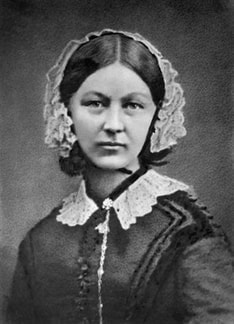
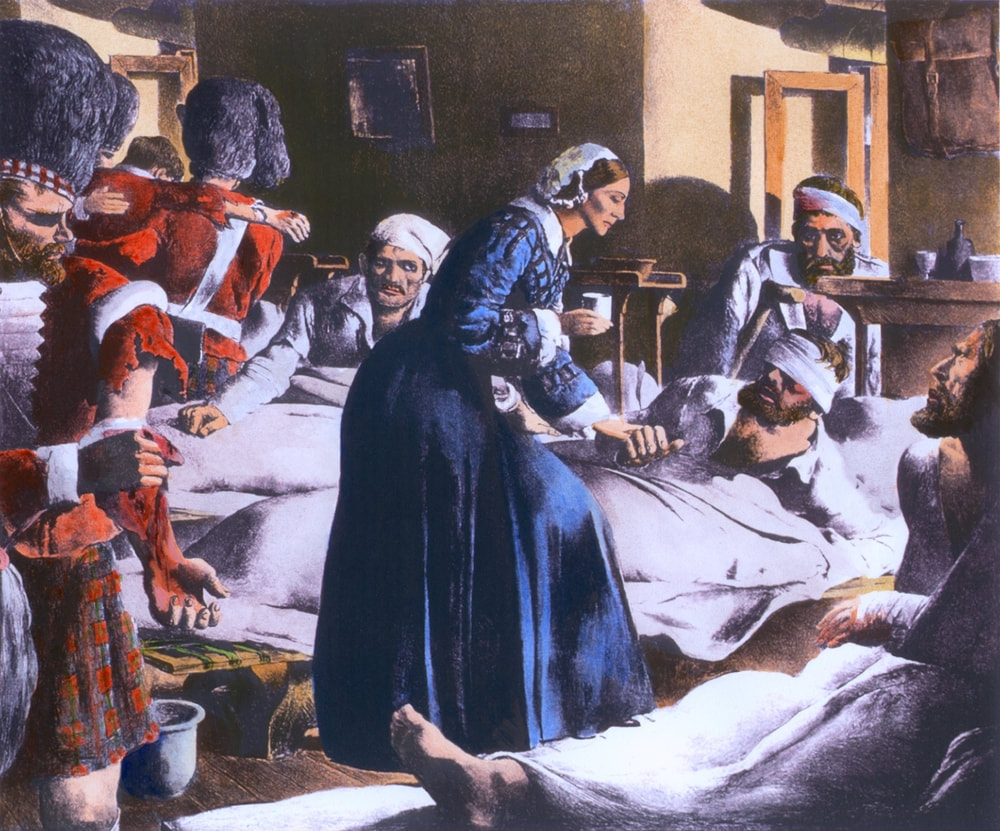
Florence Nightingale
suitor, ensure, rebel (rebellious), reputation, superintend(ent), Crimean, peninsula, outcry, Scutari, ally, allied, pit, tend, overwhelm(ed), single-handed(ly).
American Suffragettes
exuberant
precipitate
stock market
resent/resentment/resentful
propaganda
1. When did American women win the right to vote?
2. What is the ERA?
3. How did the speaker describe the women in those times?
4. What is the Great Depression?
5. Why did men become resentful?
6. What is the Married Persons Clause?
7. Why were married women fired?
8. What was the propaganda campaign against women? What was the result of this campaign?
Symbiotic Relationships
Symbiosis
aphid
sap
cornicle
honeydew
analogous
1. How does the speaker define a symbiotic relationship?
2. What is mutualism?
3. Explain the relationship between ants and aphids in detail.
Selling Goods
discount
outlet store
1. Explain the main ways of selling goods?
Crowd Behavior
boo/boo(ed) off stage
to storm
goal post
1. What is emergent quality?
2. What examples does the speaker give to describe crowd behavior?
Corneal Injuries
cornea
debris
table saw
ammonia/chlorine
protozoa
welding/welding arc
sun lamp
1. What are the reasons for corneal injuries?
2. What is keratitis? How is it cured?
Antiboitics
strain
douse
1. How does the speaker explain antiboitic resistance? What examples does he give?
2. How do bacteria evolve to resist against antiboitics?
3. What information does the speaker give about tuberculosis?
Discussion Topics:
1. How should students be evaluate at school? According to their grades or according to the effort they put to do the given tasks? What is your opinion? What can be the advantages and disadvantages of each?
2. Some people think that women should not work and should be responsible for the household and raising up children. What is your opinion about this issue?
100 Monkeys Phenomenon
What is a hundred monkeys phenomenon?
What is the girl's opinion about the phenomenon?
Why is the professor so skeptical about it?
Communication disorders
What can impede communication?
The first condition:
example:
The second condition:
example:
other reasons:
The third condition:
example:
Can communciation disorders be cured?
What does the woman mean by saying “you bet”?
